
Hidden in plain sight
Searching for doorways that lead to the past

Honestly, I think I may have invented a new pastime: crypt entranceway hunting.
Close your eyes for a moment and imagine that you are by my side as I plan my next visit to a new crypt. My typical to-do list begins with identifying a crypt and finding it on the map – not so easy as you might think! From there, I fall down a happy rabbit hole of history, architecture, local tales and intriguing quirks, jotting down the details I want to investigate once I’m there in person. After double-checking the visiting hours, I mark a date in my diary and prepare my supplies: a generous supply of snacks and a fully charged mobile phone, ready for note‑taking and photo‑snapping.
With preparations complete, I arrive at the building entrance – whether it’s a church, cathedral, cemetery or castle – fully focused, slightly breathless, and with a barely supressed sense of anticipation.
The crypt is waiting for me…. or at least it would be if I could actually find it!
Who knew it could be so challenging to find the entranceway to a crypt once you’re inside the building? They seem to have a habit of lurking in dark corners, hiding down narrow stairways, or slipping behind cunningly disguised archways. And whilst it’s true that there is usually some wonderfully curious signage, it is often positioned right next to the entrance itself which is not especially helpful when you’re still trying to locate the crypt.
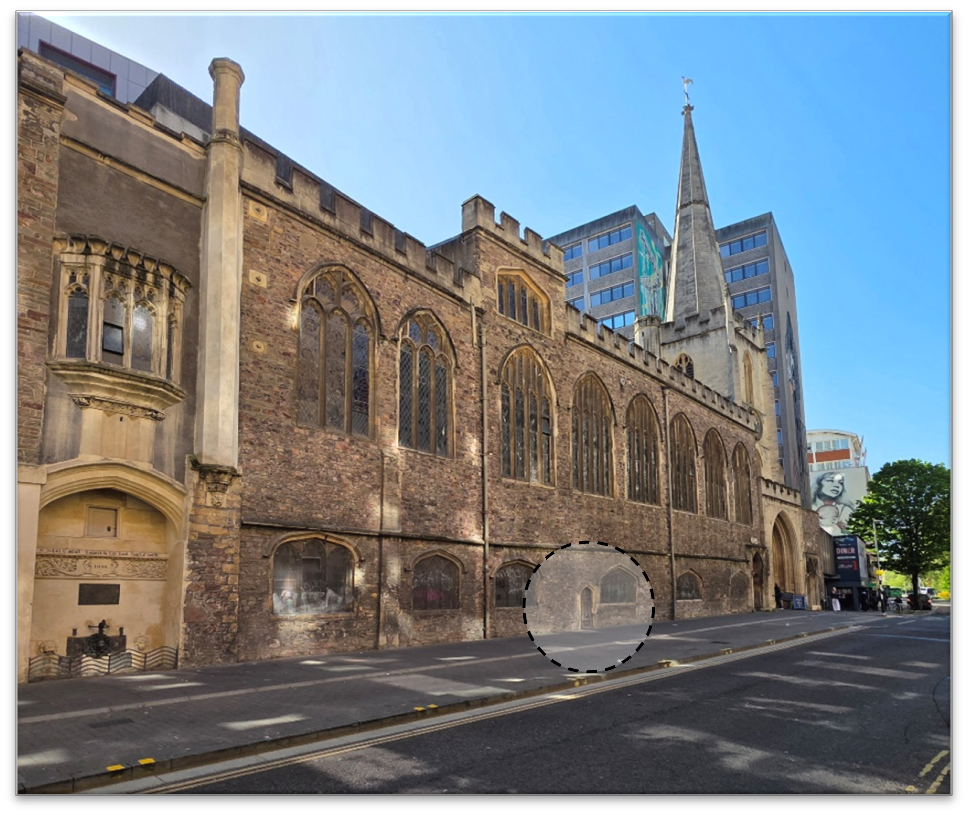
Somewhat surprisingly, I have recently discovered that a crypt entranceway is not always inside the building at all. My favourite not-inside-the building-entrance has to be St John on the Wall. For the eagle-eyed reader, there’s a clue in the name here. St John’s is the only surviving one of five churches built directly into Bristol’s city walls, serving both as part of the city’s defences and a place where travellers could pause to pray for a safe journey by sea. The entrance to its humble fourteenth century vaulted crypt sits discreetly in the side of the city wall - so subtle that you could stroll past it a dozen times without ever realising what lies beneath.
If there were an award for the most fascinating entranceway to a crypt, I would happily present it to St John the Baptist Church in Berkswell, tucked away in the West Midlands. Step inside the church and make your way along the north aisle and, about halfway along, you’ll find the stairs to the crypt are quietly concealed within one of the box pews. This discreet opening leads down into one of England’s finest Norman crypts: rib‑vaulted, atmospheric, and beautifully preserved. But it all begins with that wonderfully unassuming entranceway - a secret door disguised as a pew, hidden in plain sight.
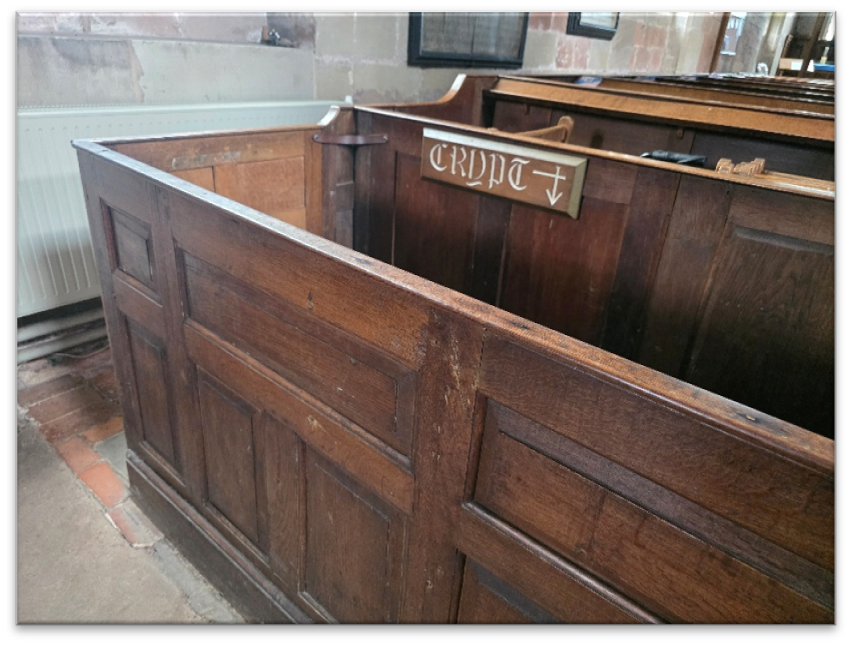
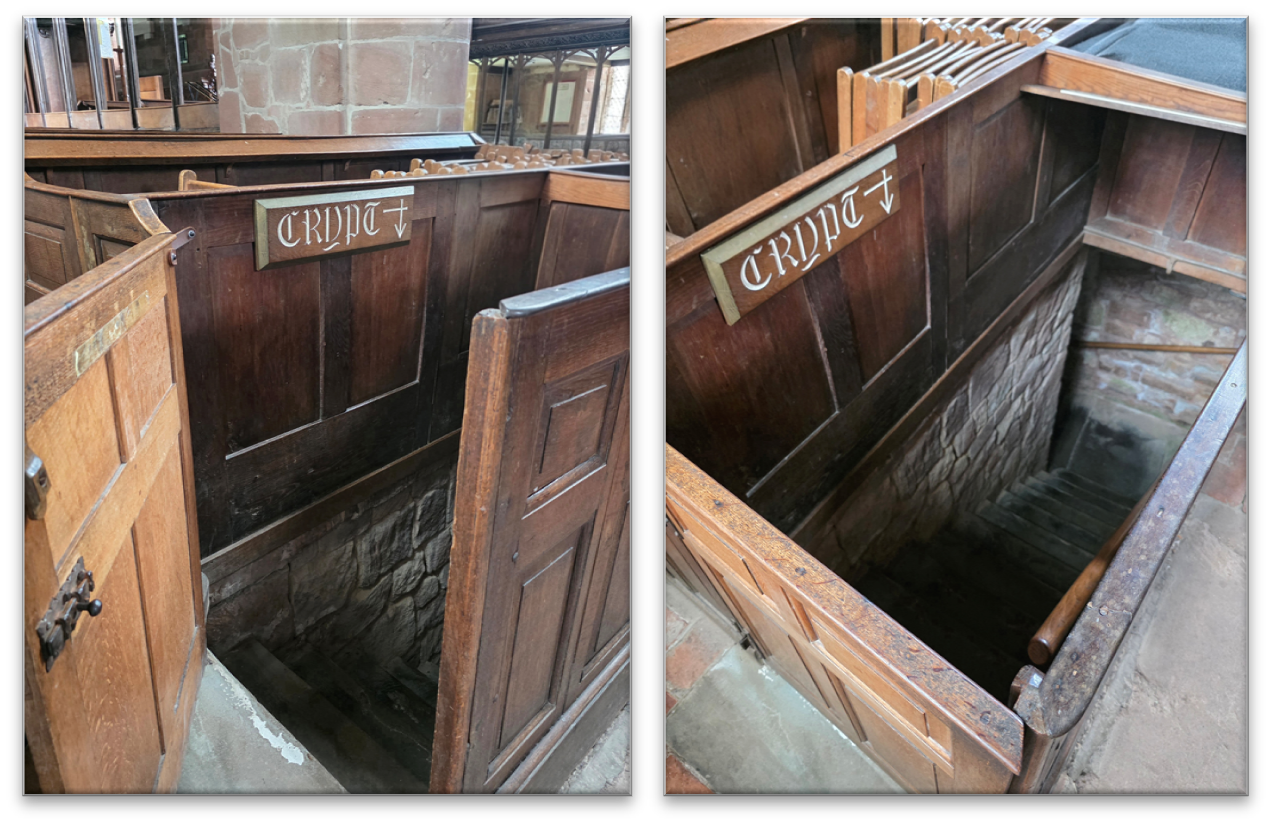
So, next time you step into a church, let your eyes wander toward the shadowy corners, the half-forgotten stairways, and even the most ordinary-looking pews. You may find your own doorway waiting – an invitation to descend and discover.
There’s something really compelling about the idea that the “entry point” to history is itself hidden, that you can be standing in a place of deep past significance and still miss the doorway entirely.